
Retatrutide is a synthetic peptide and triple receptor agonist developed by Eli Lilly that simultaneously activates three metabolic receptors: glucagon-like peptide-1 receptor (GLP-1R), glucose-dependent insulinotropic polypeptide receptor (GIPR), and glucagon receptor (GCGR). This triple mechanism distinguishes it from dual agonists like tirzepatide (GLP-1/GIP) and single agonists like semaglutide (GLP-1 only).
First entering human clinical trials in 2021, retatrutide rapidly became one of the most studied compounds in metabolic research. Its ability to target all three incretin and glucagon pathways simultaneously has generated significant scientific interest for applications in obesity research, fatty liver disease, and metabolic syndrome models. Monthly search interest in “retatrutide peptide” grew from under 2,500 searches in early 2024 to over 188,000 by early 2026 — a 75-fold increase reflecting the compound’s rapid rise in research prominence.
Retatrutide’s triple agonism produces distinct physiological effects through each receptor pathway:
The glucagon component is particularly notable in research contexts. While glucagon is typically associated with glucose elevation, at the doses and ratios present in retatrutide’s design, GCGR co-activation increases thermogenesis and hepatic lipid clearance without producing meaningful hyperglycemia, due to the concurrent GLP-1R-mediated insulin response.
The landmark Phase 2 trial (NEJM, 2023) enrolled 338 adults with obesity (BMI ≥30) and randomized them to placebo or one of five retatrutide dose levels over 48 weeks. Key findings from published data:
Phase 3 trials under the TRIUMPH program were initiated in 2023 and were ongoing as of 2026, covering obesity, type 2 diabetes, and cardiovascular outcomes endpoints.
The following ranges are drawn directly from published Phase 2 clinical trial protocols and are provided strictly for research reference purposes:
| Trial Cohort | Weekly Dose | Mean Weight Reduction (48 Weeks) |
|---|---|---|
| Placebo | — | −2.1% |
| Cohort 1 | 1mg | −8.7% |
| Cohort 2 | 4mg | −17.3% |
| Cohort 3 | 8mg | −22.8% |
| Cohort 4 | 12mg | −24.2% |
These figures are from published peer-reviewed trial data and are provided for research reference only. They do not constitute dosing guidance for human use.
Adverse events reported in Phase 2 trials were predominantly gastrointestinal and dose-dependent:
Discontinuation rates due to adverse events were 16% at the 12mg dose vs. 2% in the placebo group in Phase 2.
| Parameter | Retatrutide | Tirzepatide |
|---|---|---|
| Receptor targets | GLP-1R, GIPR, GCGR | GLP-1R, GIPR |
| Max weight reduction (trial) | ~24% | ~22% |
| Thermogenic effect | Yes (via GCGR) | Minimal |
| Hepatic fat reduction | Strong signal | Moderate signal |
| FDA approval status (2026) | Phase 3 ongoing | Approved (Zepbound/Mounjaro) |
| Dosing frequency (trial) | Weekly | Weekly |
For laboratory and pre-clinical research, sourcing retatrutide from a supplier with documented purity testing is essential for data reliability. Key criteria when evaluating a research peptide supplier:
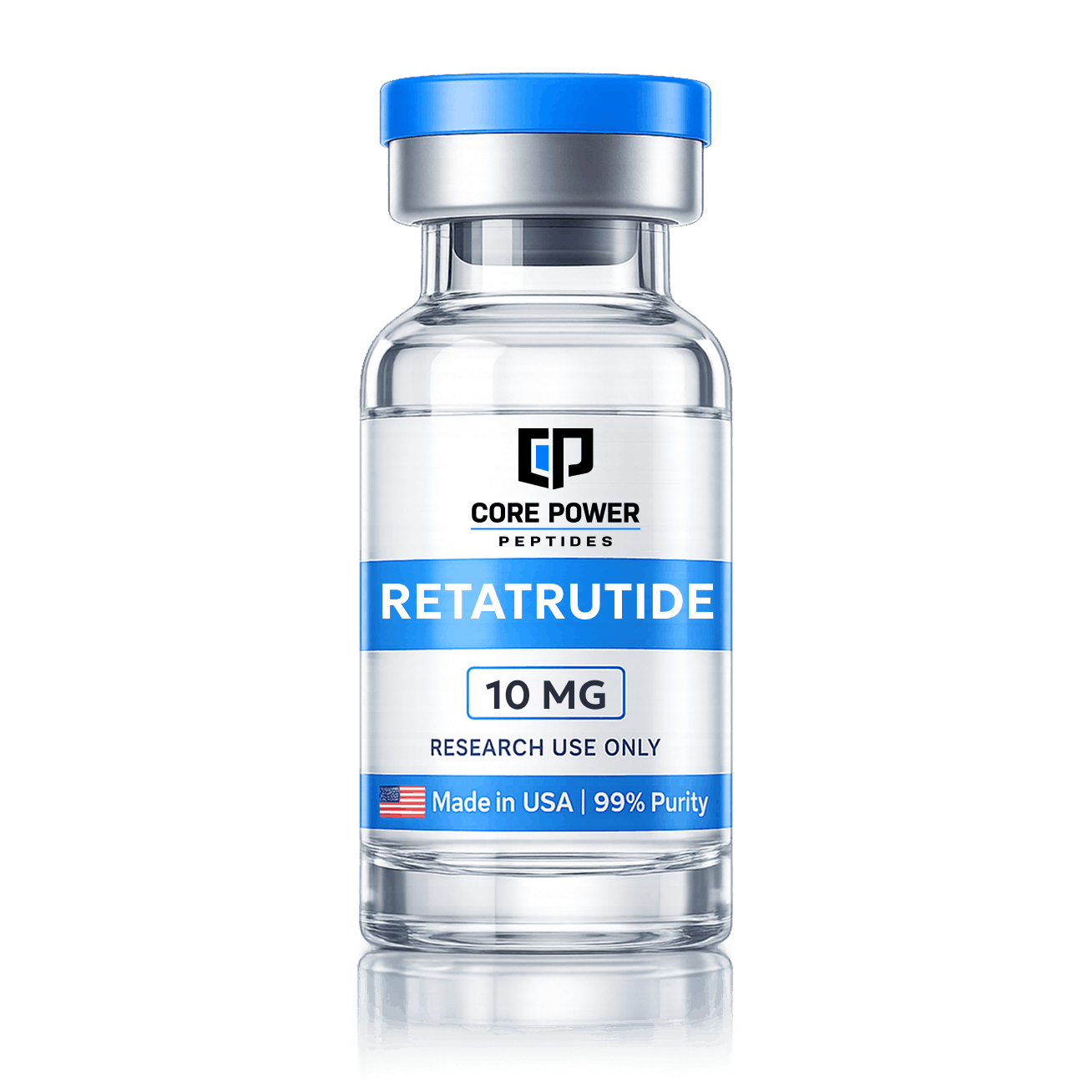
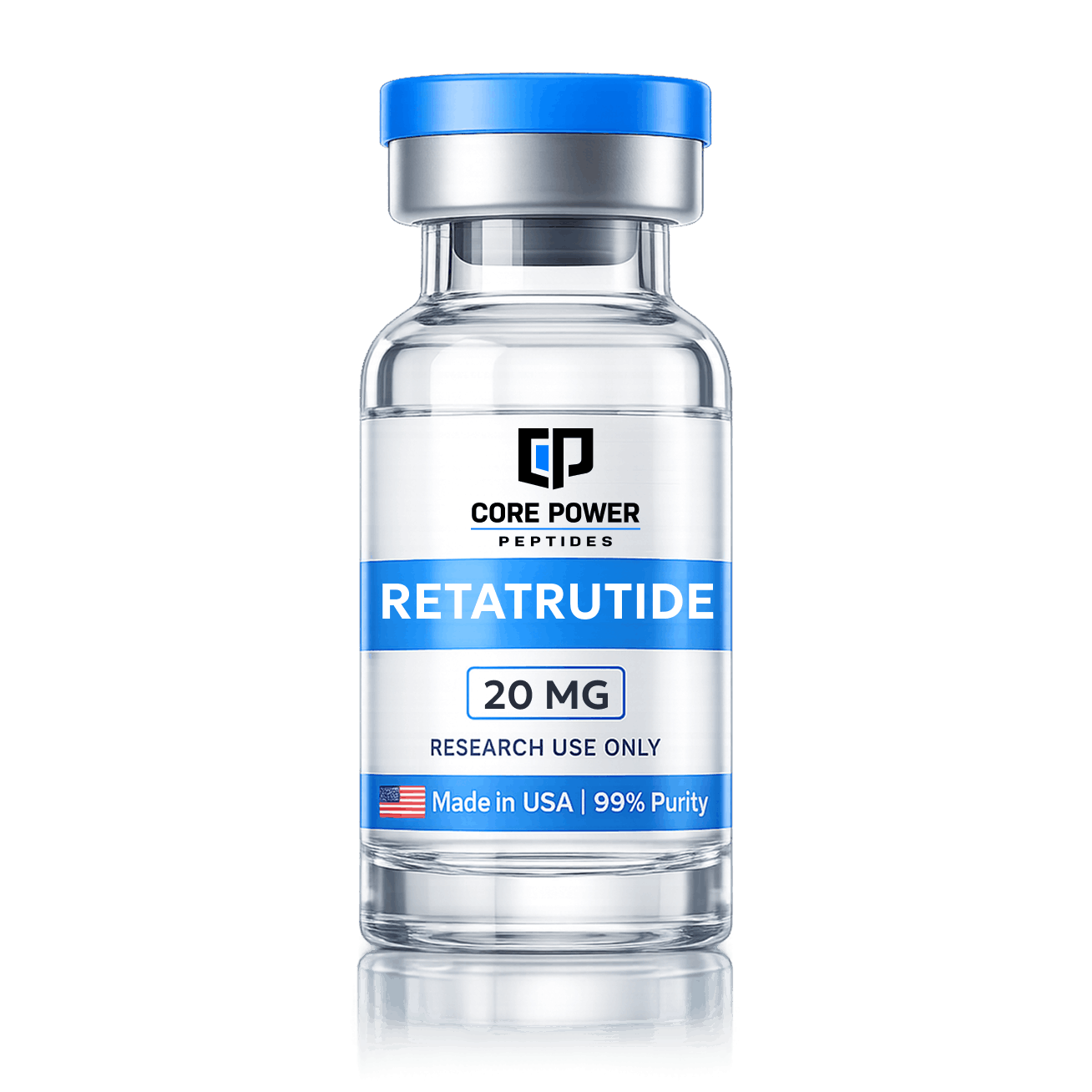
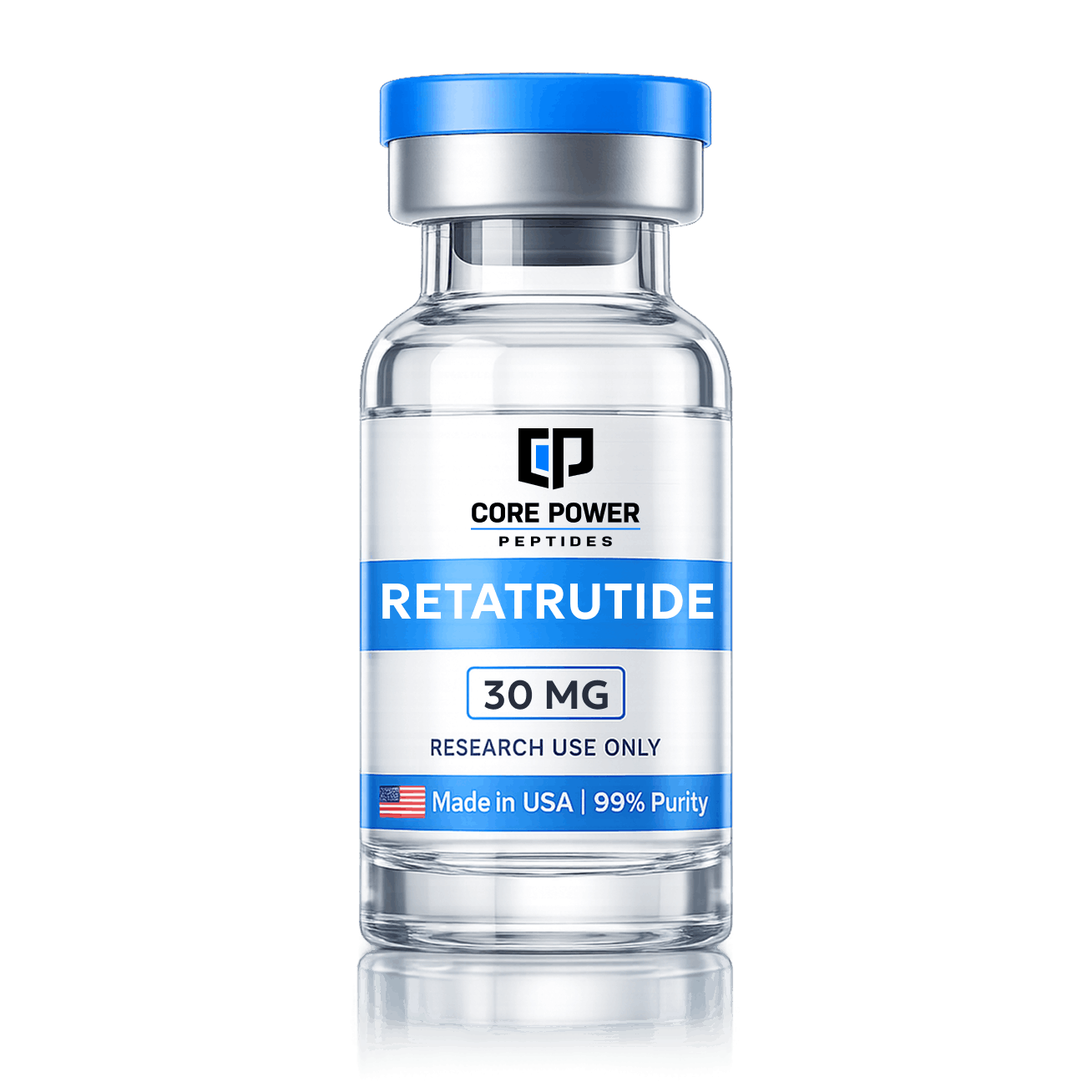
It activates GLP-1, GIP, and glucagon receptors simultaneously. The glucagon component is the differentiator from dual agonists — GCGR co-activation increases thermogenesis and hepatic lipid clearance without producing meaningful hyperglycemia, because the concurrent GLP-1-mediated insulin response offsets it.
Phase 2 data showed a mean 24.2% body weight reduction at the 12mg weekly dose over 48 weeks, versus roughly 22% for tirzepatide, along with a stronger hepatic fat reduction signal. Tirzepatide holds FDA approval; retatrutide remained in Phase 3 as of 2026.
The retatrutide before and after guide covers week-by-week reported timelines and documented case reports in detail.
Educational and scientific reference only. Retatrutide is not approved for human use outside clinical trials; material from Core Power Peptides is supplied strictly for in vitro and laboratory research, and researchers are responsible for compliance with applicable local regulations.
