
Every treatment for sexual dysfunction before 2019 worked peripherally — PDE5 inhibitors like sildenafil act through vascular mechanisms. PT-141 broke that pattern by working centrally, activating melanocortin receptors in the hypothalamic regions governing sexual motivation itself. Its FDA approval that year made it the first non-hormonal, centrally acting treatment for female sexual dysfunction to clear the agency.
PT-141 (bremelanotide) is a synthetic melanocortin agonist developed from melanotan II with structural modifications designed to target sexual function pathways while reducing cardiovascular side effects associated with its parent compound. In 2019, PT-141 received FDA approval under the brand name Vyleesi® for hypoactive sexual desire disorder (HSDD) in premenopausal women — making it the first non-hormonal, centrally acting treatment for female sexual dysfunction to receive FDA approval.
PT-141 is notable for its central rather than peripheral mechanism of action. Unlike PDE5 inhibitors (sildenafil, tadalafil) which work through peripheral vascular mechanisms, PT-141 activates melanocortin receptors in the CNS — specifically in hypothalamic regions involved in sexual motivation and arousal — producing a fundamentally different pharmacological profile that has attracted significant research interest.
| Context | Dose | Route | Notes |
|---|---|---|---|
| FDA-approved (HSDD) | 1.75 mg | SC auto-injector | As needed, ≤1× per 24h |
| Phase 2 (male ED) | 4–20 mg | SC | Dose-finding studies |
| Rodent models | 0.1–1 mg/kg | SC or IP | Behavioral and metabolic studies |
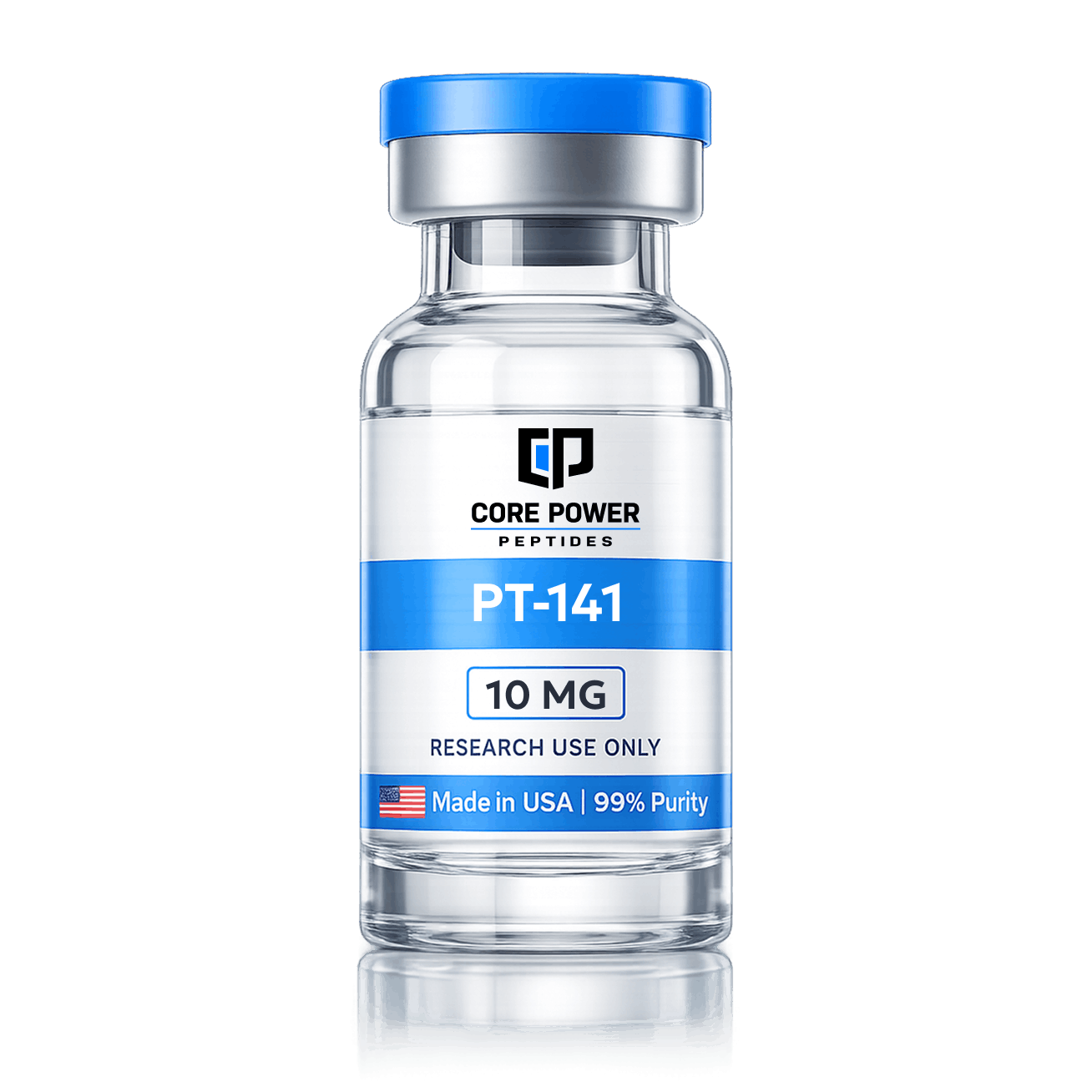
Entirely different site of action. PDE5 inhibitors such as sildenafil and tadalafil work through peripheral vascular mechanisms. PT-141 activates MC4R in the hypothalamic paraventricular nucleus — the region most directly linked to sexual motivation — producing effects on desire rather than vascular response alone. This is why Phase 2 research documented responses in men who had not responded to PDE5 inhibitors.
PT-141 was developed from melanotan II with structural modifications intended to target sexual function pathways while reducing the cardiovascular effects associated with the parent compound.
Yes. Because MC4R is expressed in feeding, metabolic, and pain-modulating regions, PT-141 serves as a pharmacological probe for melanocortin system research generally — including documented analgesic effects in rodent pain models.
Compiled for research reference. PT-141 supplied by Core Power Peptides is intended for in vitro and laboratory use only — not for human consumption, and not medical advice.
