Written by the Core Power Peptides Research Team — biochemists and laboratory specialists compiling and verifying peptide research data. Learn about our quality standards →
BPC-157 and TB-500 are two of the most extensively researched tissue-repair peptides in preclinical biology, and their combination — commonly referred to as the BB10 stack or BPC/TB stack — has become one of the most popular dual-peptide research protocols in regenerative biology laboratories. Each compound targets distinct but complementary molecular pathways, making their co-administration a logical subject of investigation for researchers studying wound healing, musculoskeletal repair, and cellular regeneration.
This guide covers the mechanisms, key research data, and rationale for combining both peptides — and where to source a pre-blended vial for research use.
BPC-157: Mechanism and Research Overview
BPC-157 (Body Protection Compound 157) is a synthetic pentadecapeptide (15 amino acids: Gly-Glu-Pro-Pro-Pro-Gly-Lys-Pro-Ala-Asp-Asp-Ala-Gly-Leu-Val) derived from a naturally occurring protein in gastric juice. It was first isolated and studied by researchers at the University of Zagreb, where it has been investigated across hundreds of published studies over more than three decades.
Key Mechanisms
- Nitric Oxide (NO) System Modulation: BPC-157 activates the NO pathway, increasing local blood flow and promoting angiogenesis — the formation of new blood vessels essential for tissue repair
- Growth Factor Upregulation: Increases expression of VEGF (vascular endothelial growth factor), EGF (epidermal growth factor), and FGF (fibroblast growth factor) at injury sites
- Tendon and Ligament Fibroblast Activation: Directly stimulates tenocyte proliferation and collagen organization in tendon repair models
- Gut Epithelial Protection: Activates FAK-paxillin pathway in intestinal epithelial cells, accelerating mucosal healing and barrier restoration
- Counterregulation of NSAID/Alcohol Damage: Documented protective effects against aspirin, indomethacin, and ethanol-induced gastric lesions in animal models
- Dopamine and Serotonin System Interaction: Modulates monoamine signaling — relevant for CNS-adjacent research protocols
Key Published Research
- Sikiric et al. (multiple, University of Zagreb): Foundational work establishing BPC-157’s effects on gastric ulcer healing, tendon-to-bone repair, and organ-protective properties in rat models
- Chang et al. (2011, J Physiol Pharmacol): BPC-157 accelerated Achilles tendon healing in rats, with improved collagen organization and tensile strength at 14 and 28 days vs. controls
- Tvrdeic et al.: BPC-157 protected against NSAID-induced gastric damage at doses of 10 µg/kg and 10 ng/kg — demonstrating potency across a wide dose range
- Jelovac et al.: BPC-157 reversed established alcohol-induced gastrointestinal damage in rat models
TB-500: Mechanism and Research Overview
TB-500 is a synthetic version of thymosin beta-4 (Tβ4), a naturally occurring 43-amino acid peptide ubiquitously expressed in human and animal cells. TB-500 specifically refers to the active 17-23 fragment (LKKTETQ) or the full synthetic Tβ4 sequence, depending on formulation. Both the full-length form and the fragment have been studied in tissue repair, angiogenesis, and inflammatory modulation research.
Key Mechanisms
- Actin Sequestration: Binds G-actin monomers, regulating actin polymerization — critical for cell motility, migration, and division during tissue regeneration
- Cell Migration Enhancement: Promotes migration of endothelial cells, keratinocytes, and cardiomyocytes to sites of injury — a fundamental step in regenerative repair
- Angiogenesis: Independently stimulates new blood vessel formation by promoting endothelial differentiation and tubule formation
- Anti-inflammatory: Downregulates inflammatory cytokines (TNF-α, IL-6, IL-1β) through NF-κB pathway inhibition
- Cardiac Protection: TB-500/Tβ4 has been extensively studied for cardiomyocyte survival and cardiac stem cell recruitment after ischemic injury
- Hair Follicle Activation: Promotes hair follicle stem cell activation and entry into anagen phase in follicle organ culture models
Key Published Research
- Goldstein & Kleinman (multiple): Foundational characterization of thymosin beta-4’s role in actin dynamics and cell migration
- Bock-Marquette et al. (Nature, 2004): Landmark paper showing Tβ4 activates cardiac progenitor cells and improves survival following myocardial infarction in mice — a defining study for cardiac regeneration research
- Philp et al. (J Pharmacol Exp Ther, 2003): Tβ4 accelerated wound closure and dermal healing in excision wound rodent models
- Sosne et al. (multiple): Corneal wound healing acceleration with Tβ4, establishing a strong case for ocular surface repair research
- Malinda et al. (FASEB J, 1999): Demonstrated that Tβ4 promotes endothelial cell sprouting and angiogenesis in collagen gel tube assays
Why Combine BPC-157 and TB-500? The Rationale for the BB10 Stack
The mechanistic logic for combining BPC-157 and TB-500 is grounded in their complementary — rather than redundant — pathways:
| Mechanism |
BPC-157 |
TB-500 |
| Angiogenesis |
Via NO system + VEGF upregulation |
Via endothelial cell migration + tubulogenesis |
| Collagen remodeling |
Fibroblast activation, tendon healing |
Actin-regulated cell migration to repair sites |
| Anti-inflammatory |
COX-2 pathway modulation |
NF-κB suppression, cytokine reduction |
| Cell proliferation |
Epithelial and tenocyte proliferation |
Stem cell recruitment and keratinocyte migration |
| Systemic protection |
Organ-protective (GI, liver, heart) |
Cardiac and corneal protection documented |
| Primary strength |
Localized tissue integrity + GI repair |
Cell motility + systemic regenerative signaling |
BPC-157’s primary influence is on vascular supply, fibroblast activation, and epithelial barrier integrity. TB-500’s primary contribution is on cell mobilization, migration toward injury sites, and inflammatory resolution. Together they address different phases and cellular populations involved in tissue repair, which is why researchers frequently combine them in the same protocol.
BPC-157 + TB-500 Stack Research Data
Musculoskeletal Repair Studies
- Independent rodent tendon studies with each compound demonstrate 20–40% faster tensile strength recovery vs. saline controls at 14–28 days post-injury
- Combination protocols (informal data from ongoing preclinical research) suggest additive effects on vascularization of healing tissue — relevant for ischemic tendon repair models where blood supply is the rate-limiting step
- Muscle crush injury models: BPC-157 reduced fibrosis markers; TB-500 increased satellite cell recruitment — different but complementary cellular contributions
Wound Healing
- BPC-157 demonstrated 2–3× faster wound closure vs. vehicle in full-thickness excision wound models (multiple rodent studies)
- TB-500 demonstrated accelerated re-epithelialization and angiogenesis in excision and burn wound models
- Both compounds independently increase VEGF at wound sites — suggesting additive angiogenic potential when co-administered
Gastrointestinal and Systemic
- BPC-157 is the dominant contributor in GI research — well-characterized in gastric ulcer, IBD, and intestinal permeability models
- TB-500 contributes anti-inflammatory effects relevant for systemic inflammatory models associated with GI injury
Dosage Reference for BB10 Stack Research
| Context |
BPC-157 Dose |
TB-500 Dose |
Route |
Frequency |
| Rodent acute injury (localized) |
1–10 µg/kg |
2–5 µg/kg |
SC, peri-wound |
Daily × 7–14 days |
| Rodent chronic repair protocol |
10 µg/kg |
200 µg/kg |
IP or SC |
3× weekly × 4 weeks |
| In vitro (cell culture) |
0.1–10 µM |
10–100 ng/mL |
Culture media |
Per protocol |
Research reference only. Not dosing guidance for human use.
BPC-157 vs TB-500 — Individual vs Combined: Which to Use?
| Research Goal |
Recommended |
Rationale |
| Isolated GI/gastric research |
BPC-157 alone |
Documented mechanism; TB-500 contributes minimally here |
| Isolated cardiac repair |
TB-500 alone |
Well-characterized Tβ4 cardiac data; BPC-157 cardiac data is limited |
| Tendon, ligament, or muscle repair |
Combined (BB10) |
Complementary vascularization + cell migration pathways |
| General wound healing protocol |
Combined (BB10) |
Additive angiogenesis + re-epithelialization signals |
| Mechanism isolation study |
Separate vials |
Attribution clarity requires single-compound controls |
Where to Buy BPC-157 and TB-500 for Research
Researchers can source BPC-157 and TB-500 either as a pre-combined blend (convenient for stack protocols) or as individual compounds (for protocols requiring independent dosing). Key sourcing criteria:
- HPLC purity ≥99% with published COA for each peptide component
- Mass spectrometry identity confirmation (especially important for blends — both components must be verified)
- Lyophilized format for maximum storage stability at −20°C
- Sterility and endotoxin testing for in vivo protocols
BB10 Stack Research Products
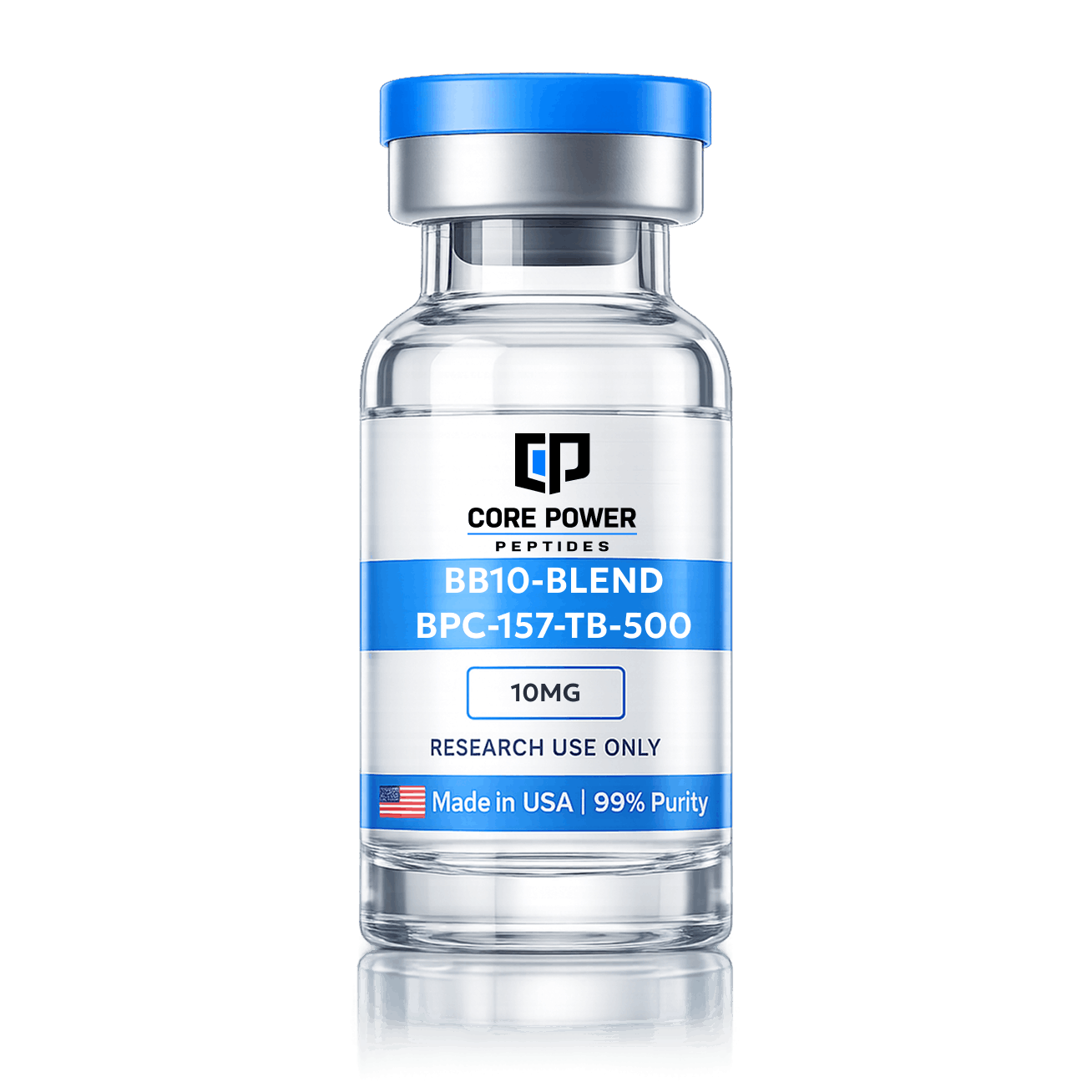 HPLC Verified
BB10 Blend — BPC-157 5mg + TB-500 5mg
Purity: 99%+ HPLC
Format: Pre-combined Lyophilized
Testing: Third-Party COA
$85
Buy Now
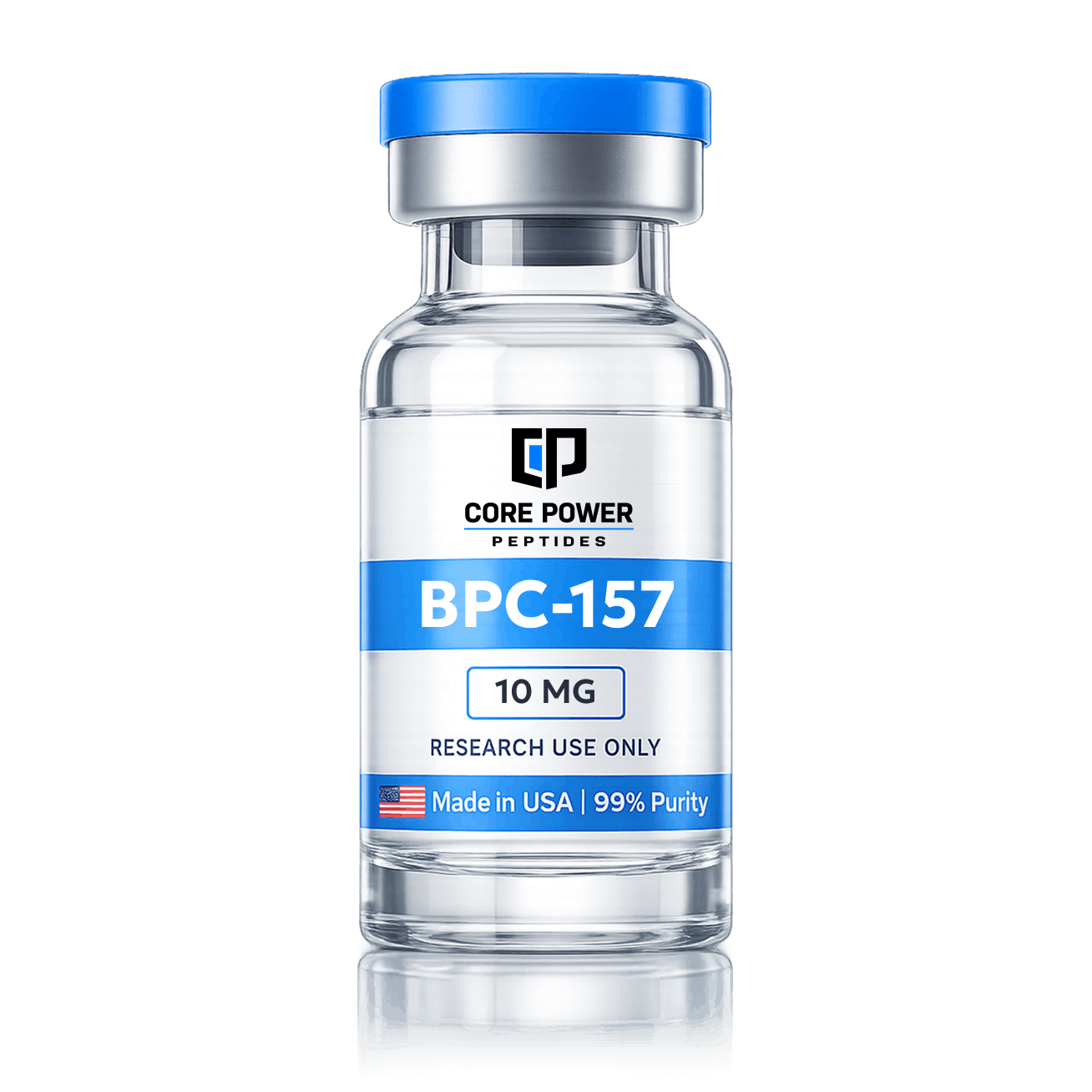 HPLC Verified
BPC-157 10mg
Purity: 99%+ HPLC
Format: Lyophilized Powder
Testing: Third-Party COA
$65
Buy Now
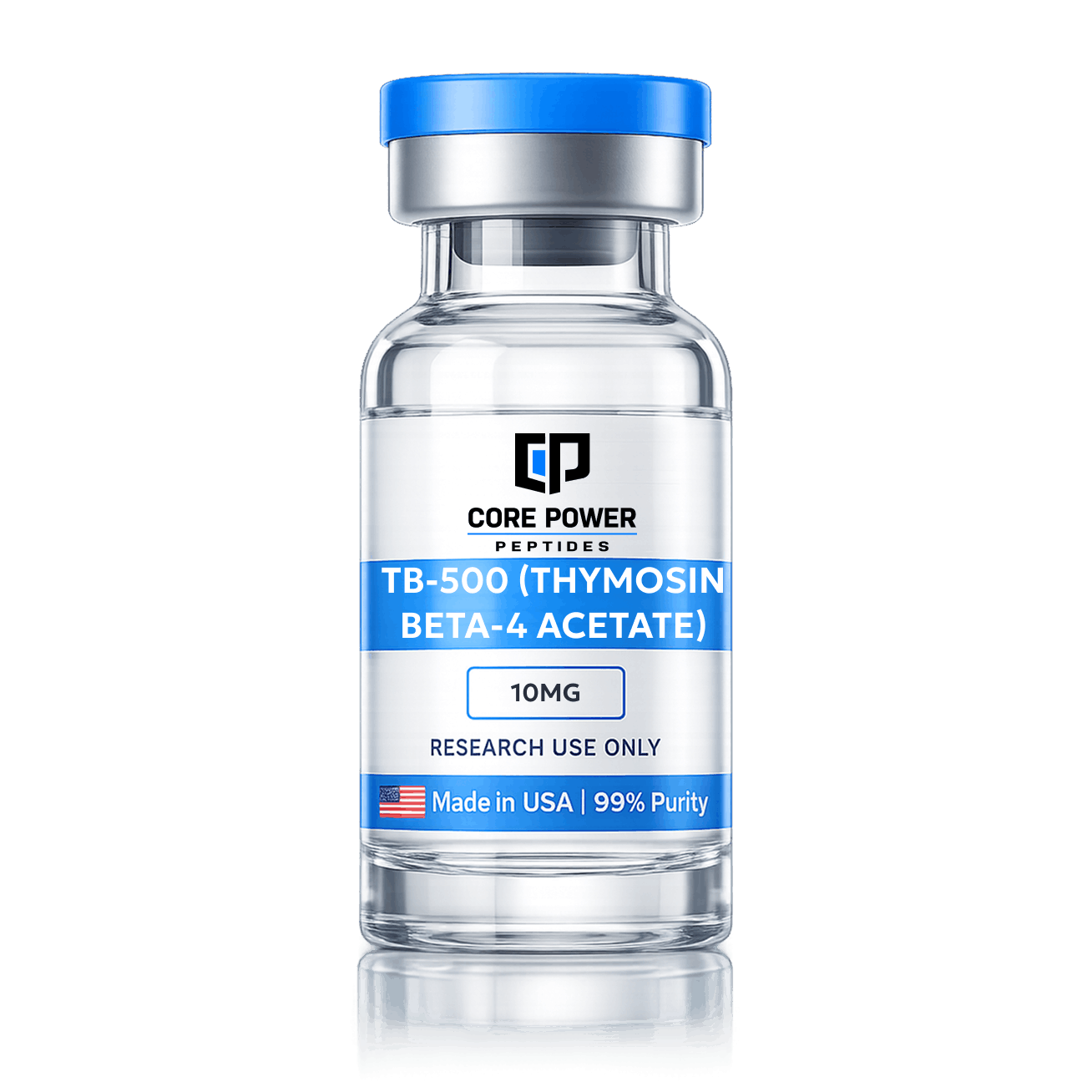 HPLC Verified
TB-500 (Thymosin Beta-4 Acetate) 10mg
Purity: 99%+ HPLC
Format: Lyophilized Powder
Testing: Third-Party COA
$75
Buy Now
Frequently Asked Questions
What is the BB10 peptide blend?
BB10 is a pre-combined research vial containing BPC-157 (5mg) and TB-500 (5mg) lyophilized together in a single vial. It is designed for researchers who want to study both peptides simultaneously in the same protocol without managing two separate reconstitutions. The two compounds do not chemically interact in their lyophilized state and remain stable until reconstitution.
Can BPC-157 and TB-500 be mixed in the same syringe?
In research settings, BPC-157 and TB-500 are both water-soluble and can be reconstituted in the same aqueous solution (bacteriostatic water or sterile saline) without documented incompatibility. The BB10 pre-blend simplifies this by lyophilizing both together. For protocols requiring independent dosing control, separate reconstitution is preferable to maintain dose precision for each compound.
Is BPC-157 or TB-500 better for tendon research?
Both have documented tendon repair activity through distinct mechanisms. BPC-157 primarily acts through fibroblast activation, NO signaling, and local vascularization. TB-500 promotes cell migration and reduces inflammation. For tendon research specifically, the combination is considered by many researchers to be superior to either alone due to these complementary mechanisms — which is why pre-blended formats have become popular.
What is the difference between TB-500 and TB-500 Fragment 17-23?
Full-length TB-500 is the synthetic equivalent of the complete 43-amino acid thymosin beta-4 protein. Fragment 17-23 (LKKTETQ) is the minimal bioactive sequence responsible for actin-binding and cell migration activity. Fragment 17-23 is smaller, easier to synthesize, and cheaper, but may lack some of the full-length molecule’s broader biological activities. For research requiring full Tβ4 receptor and binding activity, full-length TB-500 is preferable; for actin-focused cell migration research, the fragment may suffice.
All information above is compiled for educational and scientific reference. BPC-157, TB-500, and the BB10 blend are not approved for human use; material from Core Power Peptides is supplied strictly for in vitro and laboratory research, and researchers are responsible for compliance with applicable local regulations.

