
CJC-1295 is really two research tools sharing a name. The Drug Affinity Complex modification — an albumin-binding group that creates a depot effect — stretches half-life from under an hour to roughly a week, changing not just dosing frequency but the entire character of the GH response a protocol will observe. Choosing between them is a study design decision rather than a convenience one.
CJC-1295 is a synthetic growth hormone-releasing hormone (GHRH) analogue that has become one of the most widely researched peptides for growth hormone secretion studies. Available in two primary formulations—with and without Drug Affinity Complex (DAC)—this compound offers different pharmacokinetic profiles suited to varying research protocols. Understanding the distinctions between CJC-1295 with DAC and without DAC is essential for designing effective research studies.
CJC-1295 is a 30-amino acid synthetic peptide that mimics the physiological action of endogenous GHRH, developed to overcome the limitations of native GHRH (short half-life, rapid degradation) by introducing modifications that extend bioavailability while maintaining receptor specificity.
DAC is an albumin-binding modification that extends peptide half-life by attaching to serum albumin, creating a depot effect.
| Parameter | Without DAC | With DAC |
|---|---|---|
| Half-life | 30–60 min | 6–8 days |
| GH peak | 30–90 min post-dose | 1–4 days post-dose |
| GH duration | 2–4 hours | 7–14 days |
| Dosing frequency | 1–3× daily | Once weekly |
| GH pattern | Pulsatile | Sustained baseline elevation |
| Best for | Acute studies, combination stacks | Chronic exposure protocols |
A common research strategy combines CJC-1295 (GHRH pathway via GHRHR) with ipamorelin (ghrelin pathway via GHS-R1a) for synergistic GH stimulation. Dual pathway stimulation increases GH secretion 5–10× over baseline, dramatically exceeding either compound alone. Pre-mixed blends are available for convenience.
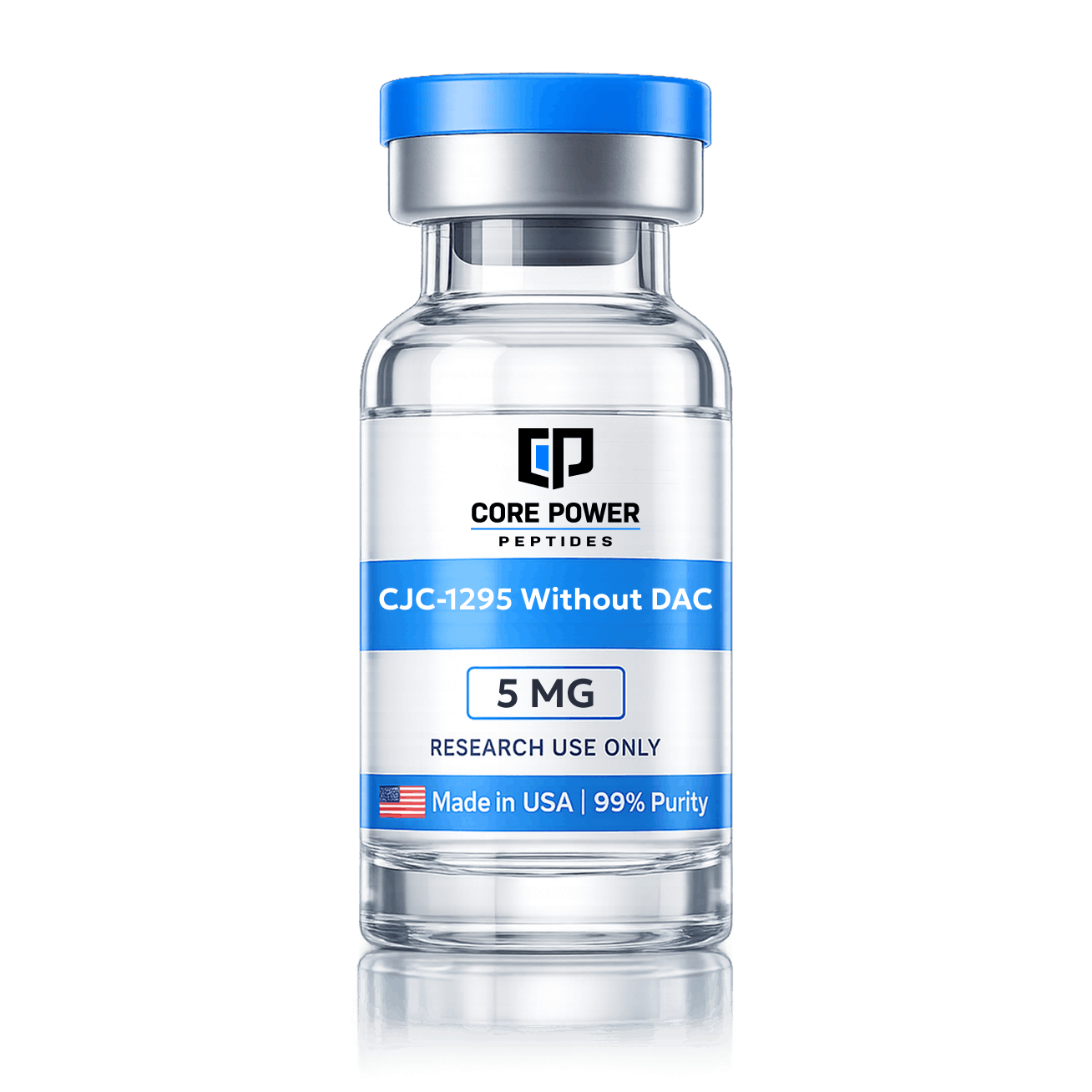
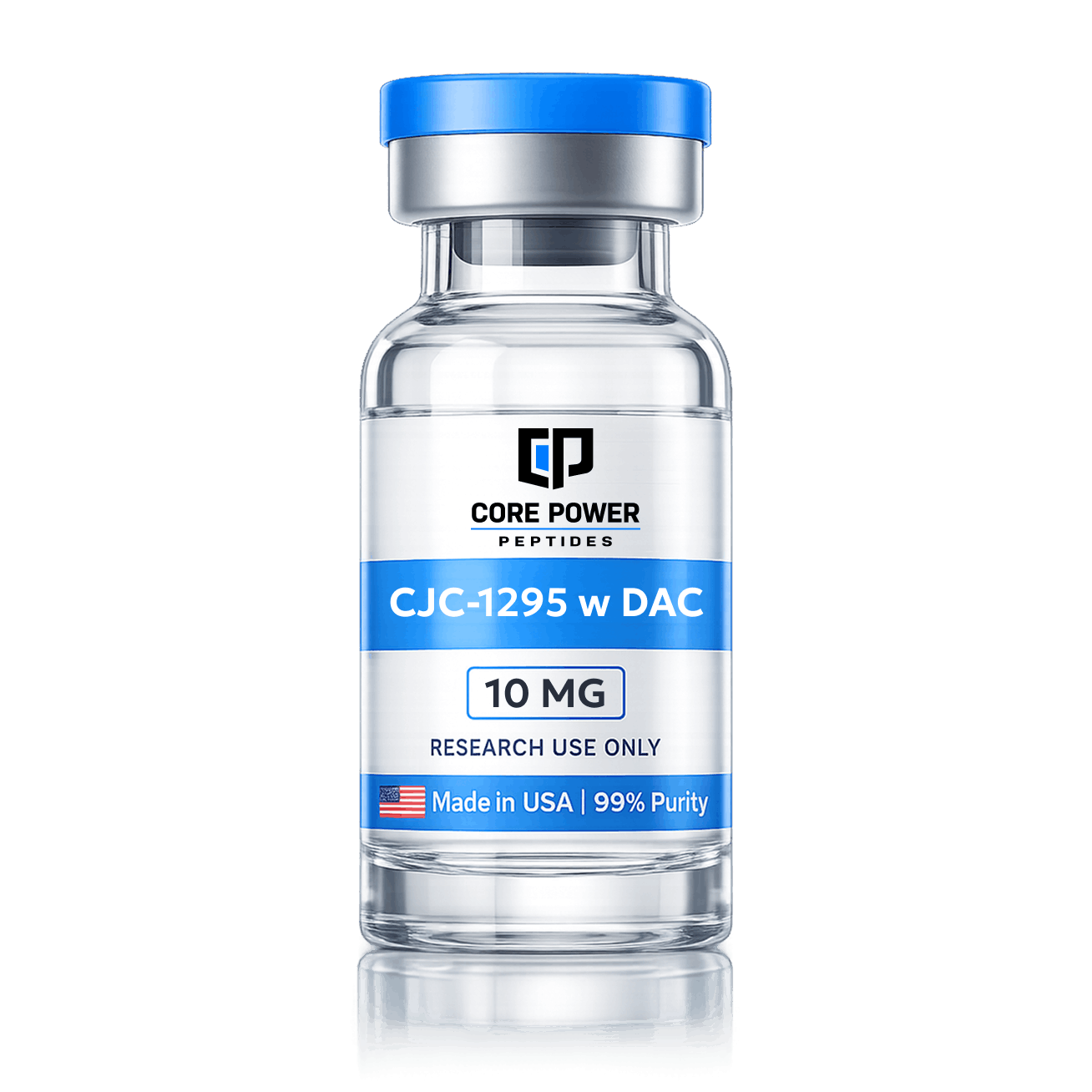
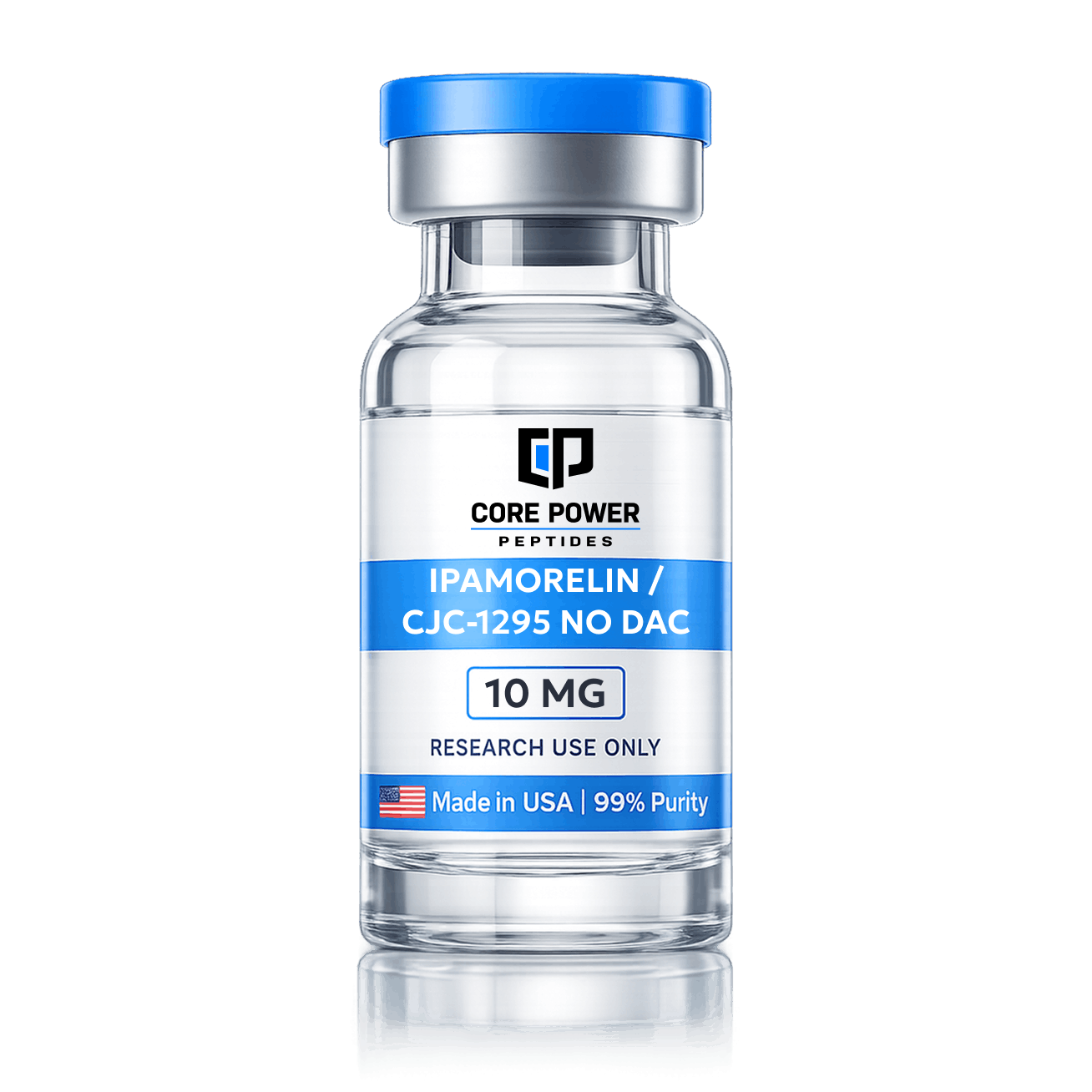
It depends on the GH pattern being studied. Without DAC produces pulsatile release with GH returning to baseline in 2–4 hours, suiting acute studies and combination work. With DAC sustains elevation for 7–14 days from a single weekly dose, suiting chronic exposure protocols. The non-DAC guide covers the short-acting form in more depth.
It binds serum albumin, creating a depot from which the peptide releases gradually — extending half-life from 30–60 minutes to 6–8 days.
Both are GHRH analogs, but tesamorelin holds FDA approval with a completed Phase 3 program, while CJC-1295 has Phase 1/2 data only. Tesamorelin is also the full 44-residue GHRH sequence, versus CJC-1295’s modified 30-amino acid structure.
Laboratory reference material. CJC-1295 from Core Power Peptides is supplied for in vitro and research use exclusively — not for human consumption, and carrying no medical claims.
