Written by the Core Power Peptides Research Team — biochemists and laboratory specialists compiling and verifying peptide research data. Learn about our quality standards →
NAD+ occupies an unusual position in metabolic research: it is simultaneously one of the oldest-characterized coenzymes in biochemistry and one of the newest frontiers in geroscience. Its role as a signaling molecule governing DNA repair, circadian rhythm, and lifespan-associated pathways has only come into focus over the past two decades — driving sustained investigation into why tissue NAD+ falls so sharply with age, and what happens when it is restored.
NAD+ Fundamentals: Coenzyme and Signaling Molecule
Nicotinamide adenine dinucleotide (NAD+) is a coenzyme found in all living cells and is essential to hundreds of metabolic processes. It cycles between oxidized (NAD+) and reduced (NADH) forms, acting as an electron carrier in cellular respiration. Beyond its classical role in energy metabolism, NAD+ has emerged as a critical signaling molecule that regulates lifespan-associated pathways, DNA repair, and circadian rhythms — making it one of the most actively researched molecules in geroscience.
A key finding driving research interest: NAD+ levels decline ~50% between ages 20 and 50 in most tissues, and this decline accelerates in metabolic disease, obesity, and neurodegeneration. This age-related NAD+ depletion has been directly linked to mitochondrial dysfunction, inflammation, and reduced DNA repair capacity in multiple published studies.
Mechanism of Action and Key Pathways
- Electron Transport Chain: NAD+ accepts electrons in glycolysis and the TCA cycle, forming NADH that drives ATP production at the ETC — fundamental to all aerobic life
- Sirtuins (SIRT1–7): NAD+-dependent deacylases that regulate gene expression, mitochondrial biogenesis, DNA repair, and inflammation. SIRT1 and SIRT3 are most studied in aging contexts
- PARP Enzymes: NAD+ is the substrate for poly(ADP-ribose) polymerases, which repair single and double-strand DNA breaks. Chronic DNA damage can deplete NAD+ via PARP hyperactivation
- CD38: NAD+ glycohydrolase that increases with age and is a primary driver of age-related NAD+ decline; CD38 inhibition is an active target in longevity research
- Circadian Clock: NAD+ levels oscillate with circadian rhythms and regulate CLOCK/BMAL1 transcription factors through SIRT1
Preclinical and Clinical Research Data
Aging and Longevity
- Imai et al. (Cell, 2013): NAD+ precursor (NMN) supplementation reversed multiple aging hallmarks in aged mice, including mitochondrial function, muscle strength, and insulin sensitivity
- Yoshino et al. (Cell Metabolism, 2021): First randomized human trial showing NMN supplementation improved muscle insulin signaling and gene expression in postmenopausal women
- Direct NAD+ IV supplementation has been shown to normalize tissue NAD+ levels rapidly in research protocols
Mitochondrial Function
- NAD+ restoration reverses age-related mitochondrial fragmentation in C. elegans and mammalian models
- Improves mitochondrial membrane potential and complex I activity in aged tissue
Neurodegeneration Models
- NAD+ depletion accelerates neuronal death in Alzheimer’s and Parkinson’s models
- NAD+ repletion via direct administration or precursors protects against amyloid-β-induced neurotoxicity in cell culture and mouse models
Metabolic Research
- Restored NAD+ improves hepatic insulin sensitivity in NAFLD mouse models
- Reduced obesity-induced inflammation through SIRT1 activation in adipose tissue
Where to Buy NAD+ for Research
Lyophilized NAD+ is the preferred research format for stability and accurate dosing. Key sourcing criteria:
- HPLC purity ≥99% with COA confirming NAD+ (not NMN or NAD precursors)
- Lyophilized powder format for −20°C long-term storage
- Endotoxin testing for cell culture and in vivo applications
- Reconstitute in physiological buffer (PBS or sterile water) immediately before use
NAD+ Research Products
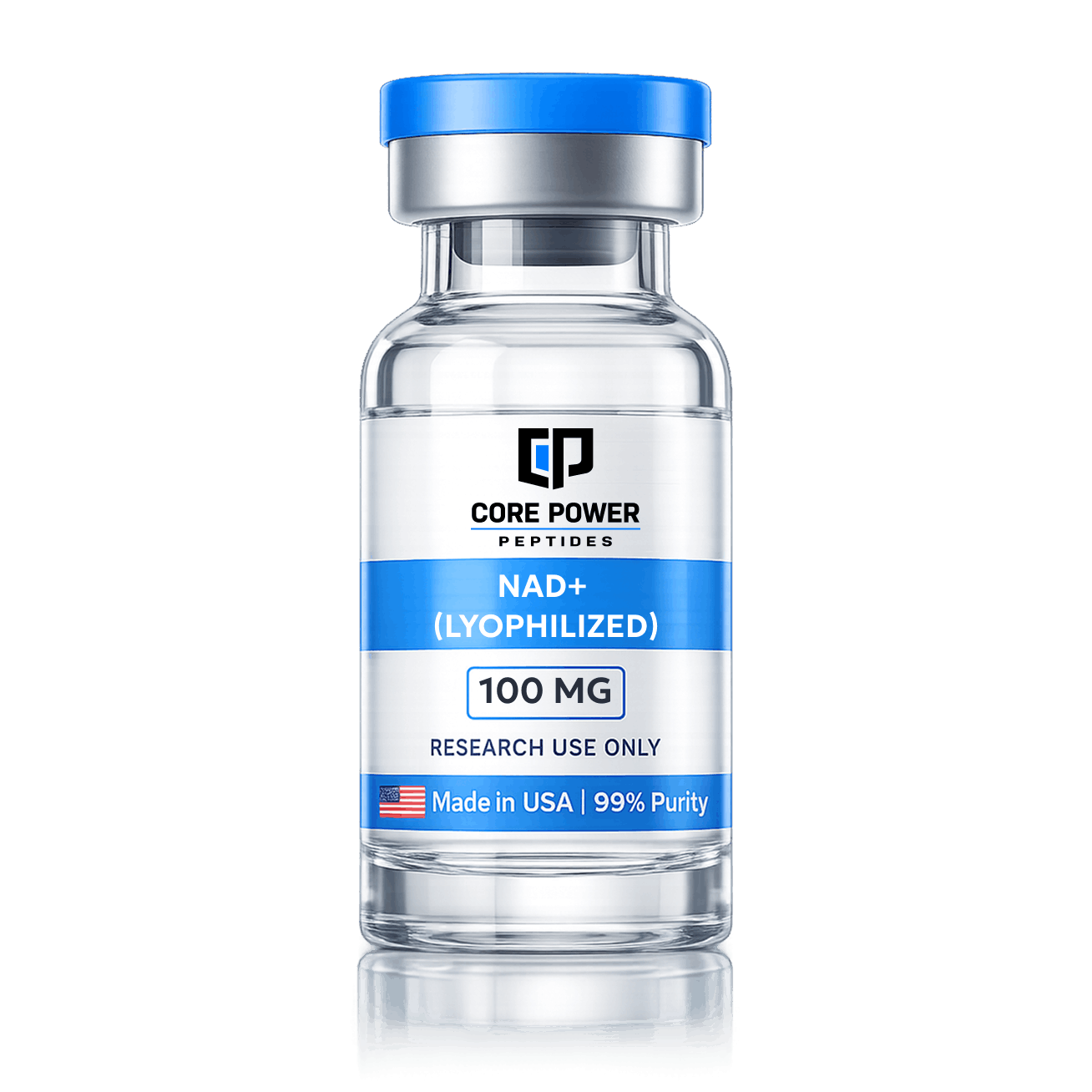 HPLC Verified
NAD+ (Lyophilized) 100mg
Purity: 99%+ HPLC
Format: Lyophilized Powder
Testing: Third-Party COA
$140
Buy Now
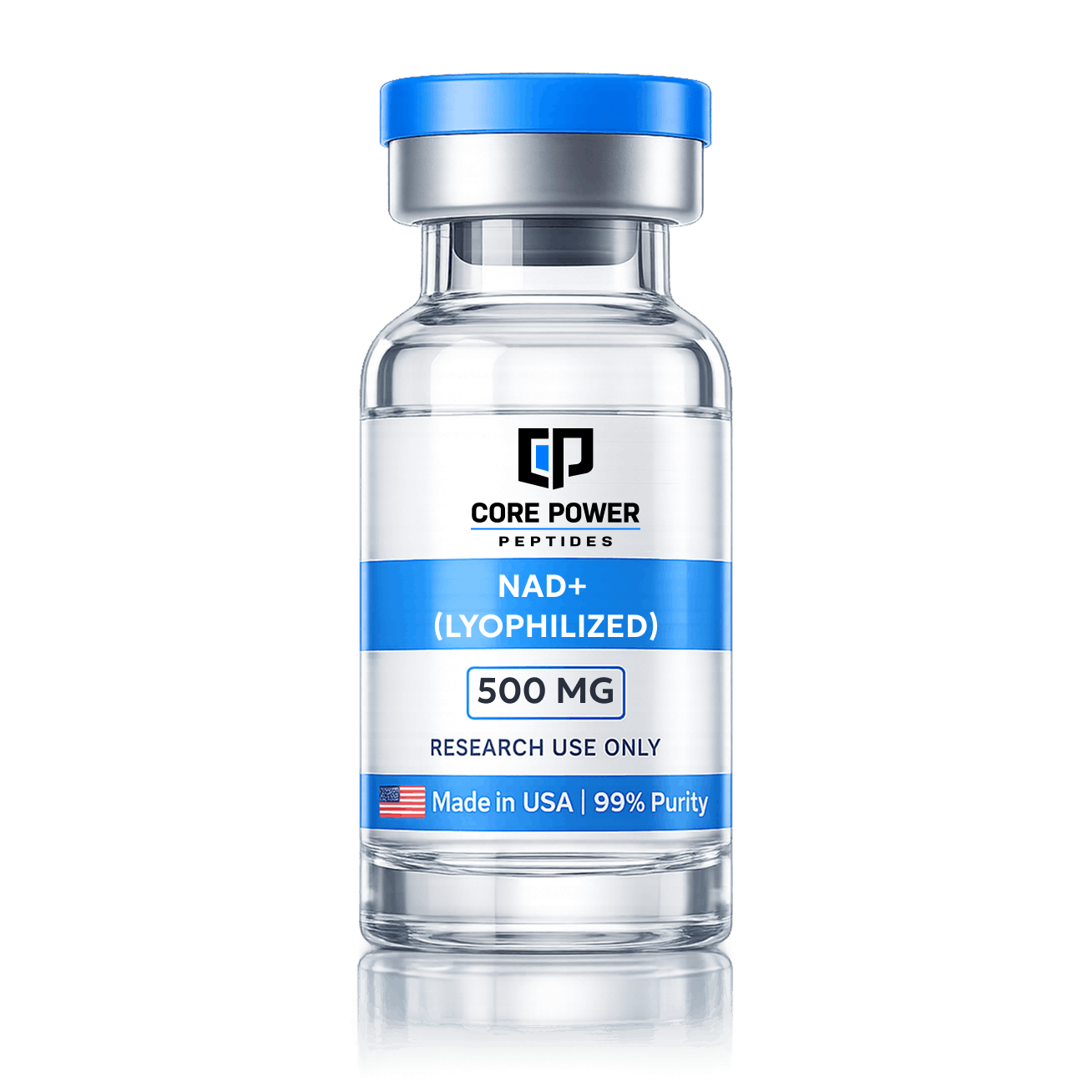 HPLC Verified
NAD+ (Lyophilized) 500mg
Purity: 99%+ HPLC
Format: Bulk Lyophilized
Testing: Third-Party COA
$550
Buy Now
Frequently Asked Questions
Why does NAD+ decline with age?
Several mechanisms contribute. CD38, an NAD+ glycohydrolase, increases with age and actively degrades the available pool. Chronic DNA damage separately drives PARP hyperactivation, which consumes NAD+ as a substrate. The combined result is roughly a 50% drop between ages 20 and 50 in most tissues, accelerating further in metabolic disease, obesity, and neurodegeneration.
How does direct NAD+ differ from NMN or NR in a research protocol?
NMN and NR are precursors that must be converted through the salvage pathway before becoming usable NAD+. Direct NAD+ administration bypasses that conversion step, which is why protocols examining rapid tissue NAD+ normalization often select the direct form over a precursor. Researchers approaching the same pathway from the consumption side sometimes pair this with NNMT inhibition instead.
What sourcing criterion matters most for NAD+ specifically?
A certificate of analysis confirming the material is genuinely NAD+ rather than NMN or another precursor — these are frequently conflated in labeling. Beyond identity confirmation, lyophilized format for −20°C storage and endotoxin testing for cell culture applications.
All content above is provided for scientific reference. NAD+ supplied by Core Power Peptides is intended for in vitro and laboratory research exclusively — not for human use, and not a substitute for medical guidance.

