
Semax began as a fragment of adrenocorticotropic hormone — ACTH 4-10 — stripped of hormonal activity but retaining neurotrophic signaling. Three decades of Russian and Eastern European neuroscience research later, the parent compound is approved for clinical use in Russia for stroke and cognitive impairment, while its doubly-modified derivative has become the more stable form used across current research protocols.
Semax Amidate (N-Acetyl Semax Amidate) is a modified neuropeptide derived from adrenocorticotropic hormone (ACTH 4-10) that has been extensively studied in Russian and Eastern European neuroscience research for over three decades. The amidate modification (C-terminal amidation) confers greater proteolytic stability compared to the parent Semax molecule, extending its biological half-life and potentially improving CNS bioavailability. N-acetylation at the N-terminus further enhances blood-brain barrier penetration in research models.
Semax and its derivatives are among the most studied nootropic peptides in preclinical literature, with documented effects on BDNF expression, dopaminergic tone, and neuroprotection under oxidative stress conditions. The compound is approved for medical use in Russia under the brand name Semax® for stroke and cognitive impairment indications.
Semax Amidate operates through several converging neuropeptide pathways:
Multiple Russian clinical studies and preclinical models have documented Semax’s effects on cognition:
| Research Context | Typical Dose | Route | Notes |
|---|---|---|---|
| In vitro | 1–100 nM | Media | BDNF upregulation studies |
| Rodent (acute) | 50–200 µg/kg | Intranasal or SC | Cognitive and stroke protocols |
| Rodent (chronic) | 50–100 µg/kg/day | Intranasal | 14–28 day protocols |
| Human (Russian clinical) | 200–600 µg/day | Intranasal | Stroke, cognitive impairment |
Research reference only. Not dosing guidance for human use.
| Parameter | Semax | N-Acetyl Semax Amidate |
|---|---|---|
| Sequence modification | None (base peptide) | N-acetyl + C-terminal amide |
| Proteolytic stability | Moderate | Higher (resistant to enzymatic cleavage) |
| BBB penetration | Moderate (intranasal) | Enhanced (N-acetylation increases lipophilicity) |
| Research potency | Base reference | Generally ~2–5x more potent per equivalent dose |
| Available formats | Powder, spray | Powder, spray |
Key criteria when evaluating research peptide suppliers for Semax Amidate:
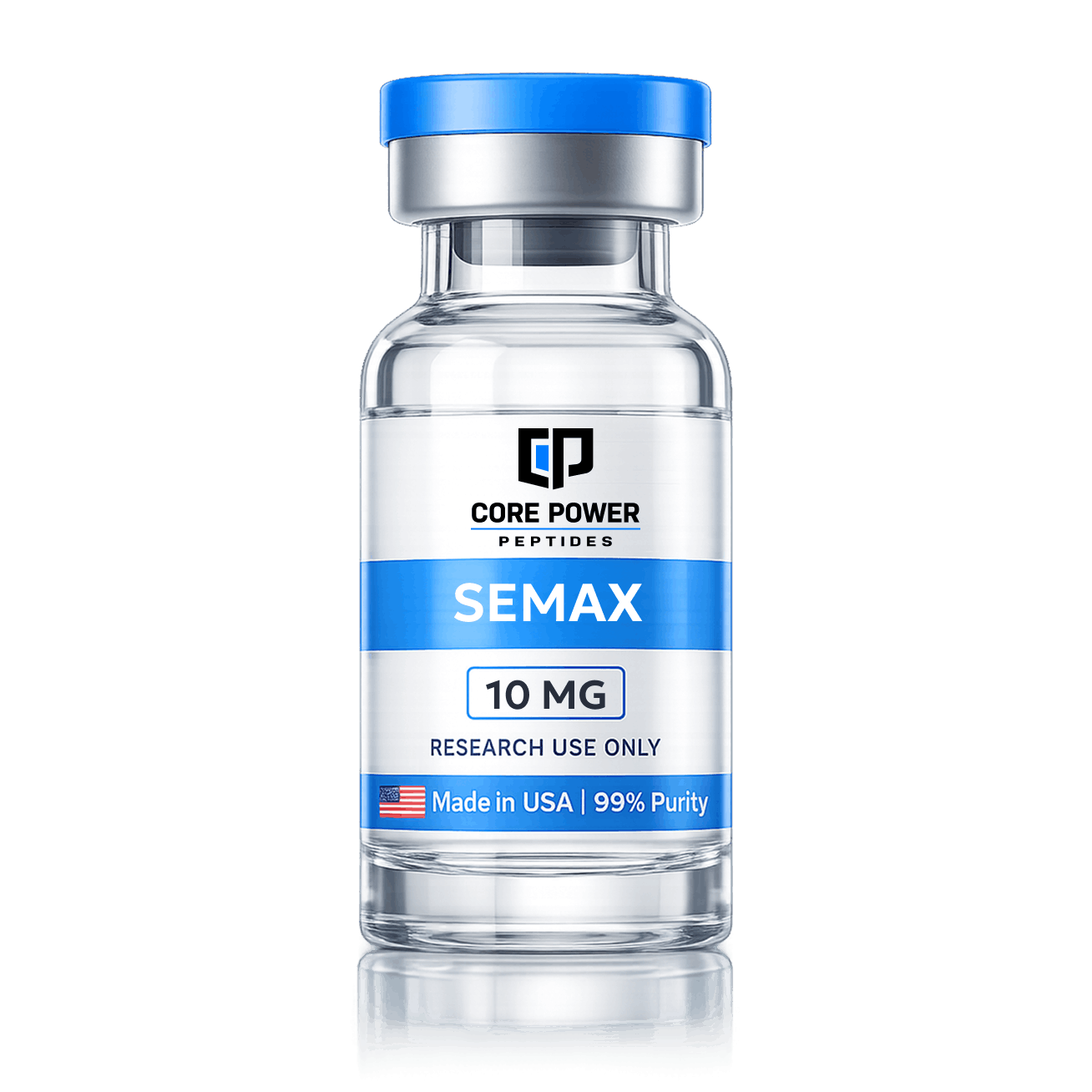
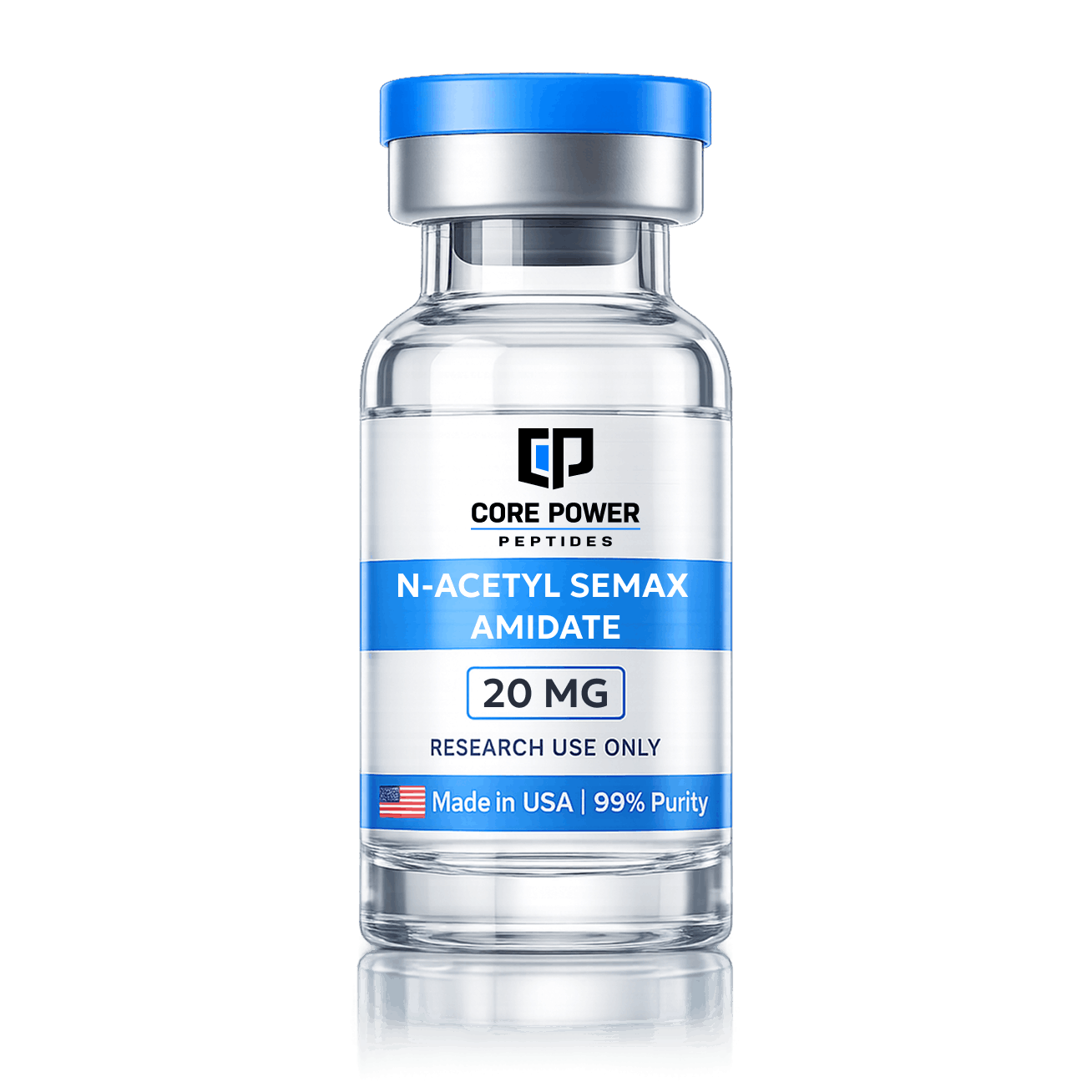
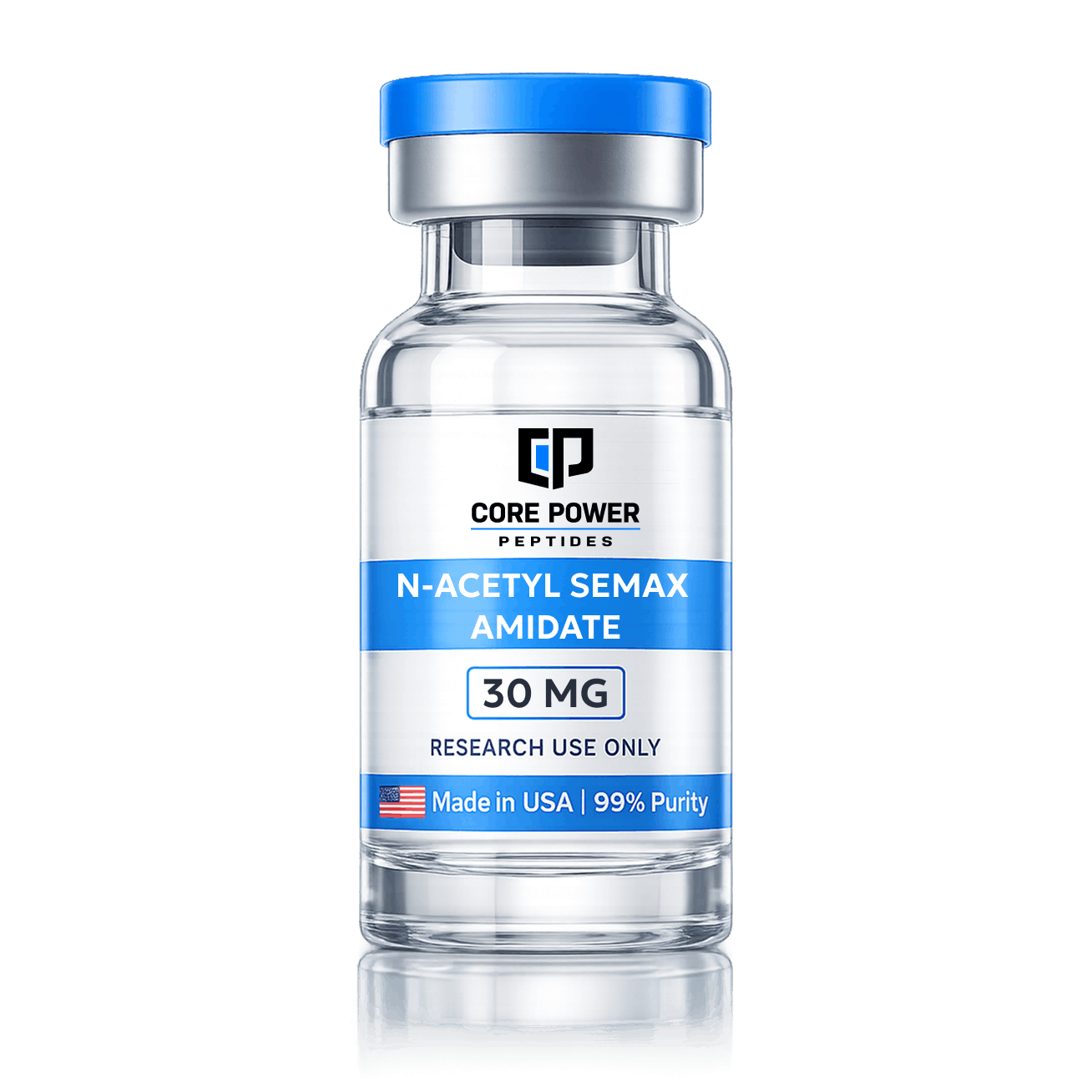
C-terminal amidation confers proteolytic stability, extending biological half-life relative to unmodified Semax. N-acetylation at the N-terminus increases lipophilicity, which enhances blood-brain barrier penetration in research models. Together they produce a compound generally characterized as roughly 2–5× more potent per equivalent dose than the parent peptide.
Both emerged from Russian neuropeptide research and both are available in N-acetyl amidate forms, but they derive from different parent molecules and engage different pathways — Semax from ACTH 4-10, acting largely through BDNF and dopaminergic signaling, and Selank from tuftsin, acting through GABAergic modulation.
Intranasal delivery is standard across both rodent protocols and Russian clinical use, reflecting the compound’s CNS targets. Subcutaneous administration appears in some acute rodent work.
Provided for educational and scientific reference. Semax Amidate is not approved for human use in most jurisdictions outside Russia; material from Core Power Peptides is supplied for in vitro and laboratory research exclusively and carries no medical claims.
